Inquiry
Form loading...
Buying Carbon Steel Hot Rolled Coil requires more than comparing today’s quoted price. The right choice depends on chemistry, dimensions, surface condition, mechanical properties, and delivery reliability. A coil may look acceptable under warehouse lighting, yet show scale, edge cracks, or uneven winding after processing. That detail matters when the material will be cut, formed, welded, or painted.
This guide presents ten practical tips for evaluating suppliers and coil specifications. Check the required grade, thickness tolerance, width, coil weight, and intended application before requesting offers. Ask for a mill test certificate that matches the actual heat number, not a generic sample. Confirm whether the surface has heavy mill scale, rust protection, or visible handling marks. Small differences can affect yield and finishing costs.
Look beyond the lowest offer. Freight distance, unloading equipment, packaging, and storage conditions can change the final cost. A dependable supplier should explain production origin, inspection procedures, replacement terms, and realistic lead times. Photographs help, but they are not enough. Third-party inspection may be worthwhile for large orders or critical projects. Still, no checklist removes every risk. Specifications can be misunderstood, and even experienced buyers occasionally miss a tolerance detail. Review the purchase order carefully, especially before releasing payment. Practical judgment matters. The best purchase balances verified quality, suitable performance, transparent documentation, and dependable service.
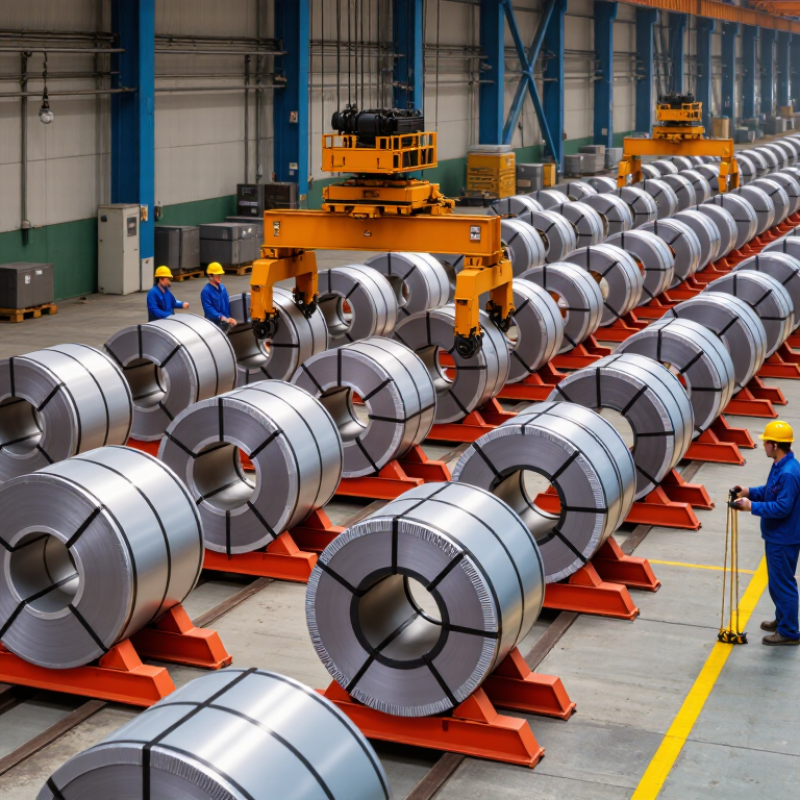
Buying carbon steel hot rolled coil starts with a precise specification, not a low quoted price. State the steel grade, forming method, thickness, width, coil weight, and delivery condition. A coil for structural frames may need different yield strength than one for bent brackets. Check the applicable standard and revision. Small wording matters. “Nominal” thickness does not mean identical thickness at every point. Request thickness and width tolerances in writing on the order confirmation.
Review chemical limits for carbon, manganese, sulfur, and phosphorus. These values affect weldability, bending, and brittle behavior. For demanding fabrication, request a material test certificate with heat number, test results, and traceability. Verify yield strength, tensile strength, elongation, and impact requirements when needed. Do not rely on appearance alone. Dark mill scale can hide dents, edge cracks, or uneven trimming. Specify mill edge or cut edge, surface quality, flatness, and permissible coil telescoping.
Confirm whether the coil is pickled, oiled, or supplied with untreated scale. That choice changes storage needs and preparation costs. Ask how the supplier controls coil ID, outer diameter, lifting points, and packaging. I have seen teams compare price while missing an oversized coil their line could not safely unwind. That mistake was avoidable. Compare the specification with your decoiler, roll-forming line, and welding procedure. If one requirement remains vague, clarify it before approval. Record the coil number during receiving inspection.
| Tip | Specification Dimension | Typical Data or Options | What to Check Before Buying | Why It Matters |
|---|---|---|---|---|
| 1 | Steel Grade and Standard | Common choices include ASTM A36 for general structural use, ASTM A1011 or EN 10025 structural grades, and low-carbon commercial-quality grades for forming applications. | Confirm the exact standard, grade designation, product form, delivery condition, and whether the purchase order requires a material test certificate. | Different grades have different chemical limits, yield strength, tensile strength, weldability, and forming performance. |
| 2 | Thickness | Hot rolled coil is commonly supplied from approximately 1.2 mm to more than 12 mm, depending on the mill, grade, and end use. | Specify nominal thickness, permitted thickness tolerance, measurement location, and whether the required thickness is before or after scale removal. | Thickness affects load capacity, bending behavior, welding parameters, weight, and compliance with fabrication drawings. |
| 3 | Coil Width | Common commercial widths include approximately 900 mm to 2,000 mm, with availability depending on the production line and required grade. | Confirm nominal width, width tolerance, edge condition, slit-edge requirements, and whether the coil will be used as full-width material or slit into narrower strips. | Correct width reduces trimming loss and ensures compatibility with roll-forming, cutting, stamping, and fabrication equipment. |
| 4 | Mechanical Properties | For ASTM A36 structural plate-type material, the specified minimum yield strength is commonly 250 MPa and minimum tensile strength is commonly 400 MPa, subject to the applicable product requirements. | Compare the certificate values with the required yield strength, tensile strength, elongation, and test direction. Do not use values from one grade to approve another grade. | Mechanical properties determine whether the coil can safely withstand structural loads, forming operations, and service conditions. |
| 5 | Chemical Composition | Low-carbon hot rolled steels generally use controlled carbon and manganese levels; exact limits vary by grade and standard. Carbon equivalent may be evaluated for welding. | Review carbon, manganese, phosphorus, sulfur, silicon, and any alloying elements against the specified standard. For welded structures, request carbon-equivalent information when necessary. | Chemistry influences weldability, hardness, strength, ductility, corrosion behavior, and suitability for subsequent processing. |
| 6 | Surface Condition and Scale | Standard hot rolled coil normally has a dark mill-scale surface. Pickled and oiled coil has the scale removed and is protected with a light oil film. | Specify untreated hot rolled, pickled, pickled-and-oiled, or another required surface condition. Define acceptable rust, scale, pits, scratches, slivers, and edge defects. | Surface condition affects painting, galvanizing, welding, forming, appearance, cleaning cost, and corrosion protection. |
| 7 | Coil Weight and Outside Diameter | Individual coil weights commonly range from several tonnes to more than 20 tonnes. Outside diameter and inner diameter vary according to the mill and handling system. | Confirm minimum and maximum coil weight, inner diameter, outside diameter, maximum coil width, lifting method, and the handling limits of the receiving equipment. | Incorrect coil dimensions can create transport, storage, crane, decoiler, and production-line compatibility problems. |
| 8 | Flatness, Camber, and Edge Quality | Requirements may include limits for flatness, crown, wedge, camber, telescoping, coil set, and edge wave. The applicable limits should come from the agreed standard or purchase specification. | State the required flatness and edge tolerances, inspection method, sampling frequency, and whether side trimming or special edge conditioning is required. | Shape defects can cause feeding problems, uneven forming, poor nesting, inaccurate cutting, and increased scrap. |
| 9 | Dimensional Tolerances | Thickness, width, length after cutting, and shape tolerances may be governed by standards such as ASTM A568/A568M or EN 10051, depending on the ordered product. | Identify the governing tolerance standard and required tolerance class. Confirm whether normal, restricted, or special tolerances apply. | Tolerances affect downstream cutting accuracy, part fit-up, material yield, and acceptance during inspection. |
| 10 | Inspection, Documentation, and Delivery | Typical documents include a material test certificate, heat or cast number, chemical analysis, mechanical test results, dimensional inspection records, packing details, and shipping documents. | Agree on inspection responsibility, certificate format, traceability markings, packing method, corrosion protection, delivery terms, allowable coil quantity variation, and claims procedure. | Complete documentation supports traceability, quality control, customs clearance, receiving inspection, and resolution of nonconforming material. |