Inquiry
Form loading...

7 Tips for Buying Carbon Steel Sheet Coil?

Buying Carbon Steel Sheet Coil is a sourcing decision, not a simple price comparison. The right coil affects forming quality, welding performance, paint adhesion, delivery risk, and total production cost. A shiny surface can still hide poor thickness control or storage damage.

The scale of the steel industry explains why careful purchasing matters. World Steel Association data shows that global crude steel production reached about 1.89 billion tonnes in 2023. However, production volume does not guarantee consistent coil quality. The International Energy Agency reports that iron and steel production creates roughly 7% to 9% of global energy-related carbon dioxide emissions. Buyers increasingly examine both technical performance and supply-chain responsibility.

Small details matter. Check the specified grade, thickness tolerance, width, coil weight, inner diameter, and surface finish. Ask for a mill test certificate, heat number, chemical composition, and mechanical properties. Standards such as ASTM A568, ASTM A36, EN 10130, and EN 10051 may apply, depending on the product and market. Confirm the correct standard with an engineer or qualified inspector.

There is no perfect checklist.

The following seven tips focus on practical buying risks. They cover supplier verification, grade selection, dimensional accuracy, surface inspection, certification, logistics, and cost evaluation. A responsible buyer should also compare samples against actual production requirements. One overlooked issue, such as edge damage beneath protective wrapping, can create scrap across an entire coil. These recommendations are useful, but they still require judgment, documented inspection, and honest communication with the supplier.
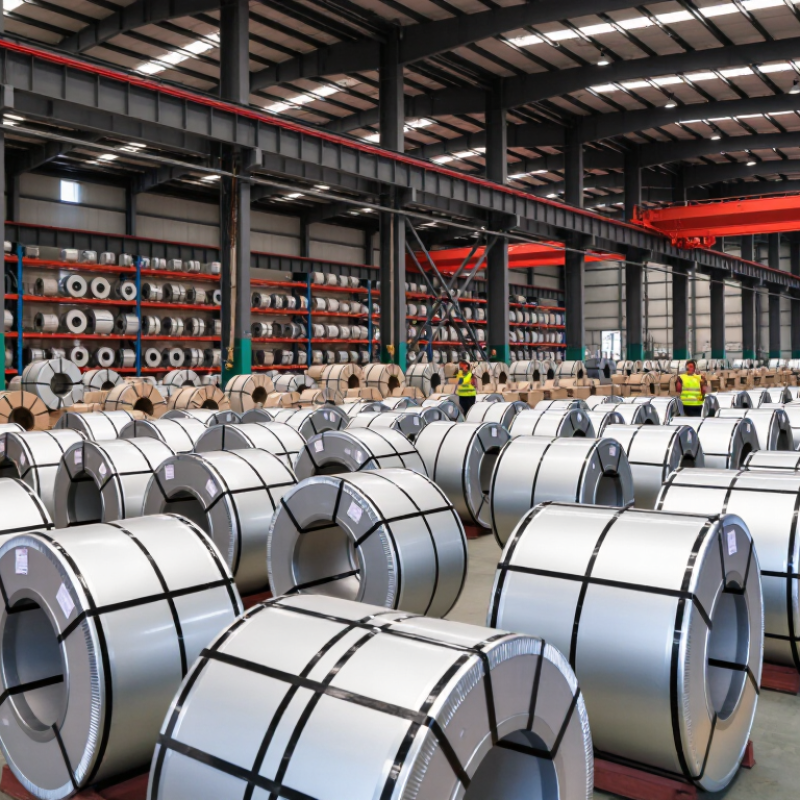
7 Tips for Buying Carbon Steel Sheet Coil?

Define the Grade: Compare A36’s 36 ksi Yield and 58–80 ksi Tensile Strength

When buying carbon steel sheet coil, define the grade before comparing price or surface finish. A36 is a common structural grade with a minimum yield strength of 36 ksi. Its tensile strength typically ranges from 58 to 80 ksi. These numbers describe different failure stages.

Yield strength shows when steel begins permanent deformation. A 36 ksi value means the sheet should resist lasting bending under properly controlled loading. Tensile strength measures the highest stress before fracture develops. It is higher because the steel can harden after yielding. This distinction matters when selecting coil for brackets, frames, base plates, or lightly formed components. A stronger tensile number does not automatically mean better performance.

Check the mill test certificate, thickness, chemistry, and applicable specification. Confirm that the stated values match the ordered thickness. Test requirements can vary by product form and supply condition. In practical inspections, a coil may look perfect but still fail the wrong grade requirement. That mistake is expensive.

Do not rely on appearance alone. Ask how the coil was leveled, stored, and protected from moisture. Surface rust may be cosmetic, but pitting reduces usable thickness. A36 can suit many general fabrication jobs, yet it may be a poor choice for repeated bending or severe fatigue. I once treated a yield value as a simple strength ranking; that shortcut ignored forming behavior and led to unnecessary redesign. Check the actual load case.
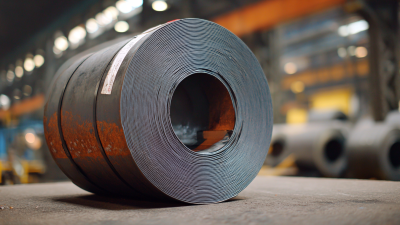
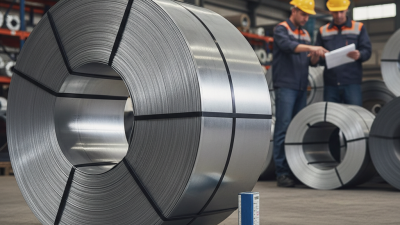
Set Thickness and Width: Verify ASTM A568 Tolerances Against Nominal Gauge

Buying carbon steel sheet coil requires more than selecting a nominal gauge. ASTM A568/A568M tolerance tables link thickness limits to ordered thickness, width, and product condition. A “16-gauge” coil may not measure exactly 1.500 mm. Gauge labels are only reference points.

Tip: Write the actual thickness in millimeters on the purchase order.

Tip: Request the ASTM A568 tolerance table used by the seller.

Tip: Confirm whether the tolerance is plus-and-minus or a one-sided limit.

Tip: State the finished width, including edge condition.

World Steel Association reported about 1.88 billion tonnes of crude steel production in 2023. That scale shows why small specification errors can multiply across production.

Tip: Measure samples with a calibrated micrometer.

Check the center and both edges.

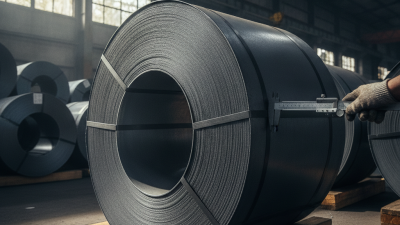
Tip: Measure several coil locations, not only the outer wraps.

Tip: Compare readings with the ordered thickness, width, and ASTM limits.

I once treated a gauge chart as exact, which was a poor assumption.

Coil shape, camber, and handling can also affect downstream forming. ASTM tables do not replace a clear inspection plan. A certificate should identify heat, coil, measured dimensions, test method, and applicable standard edition. Double-check the details.

Choose Surface and Edges: Match Pickled, Oiled, Cold-Rolled, or Coated Coil

Buying carbon steel sheet coil starts with the surface, not the lowest quoted price. Ask where the coil will be used, stored, and formed. Pickled and oiled coil suits fabrication when mill scale must be removed and temporary rust protection matters. Check oil coverage, odor limits, and cleaning requirements before approval. A dry corner can become a visible rust spot. It happens.

Cold-rolled coil offers tighter thickness control and a smoother finish for exposed parts. It can work well for bending, painting, or precise assemblies. However, smooth does not mean defect-free. Inspect sample sheets under angled light for scratches, dents, roll marks, and staining. Request measured roughness and thickness data, not vague terms like “premium surface.”

Coated coil needs a different inspection. Confirm coating type, coating mass, adhesion, and color tolerance. Edges deserve equal attention. Mill edges are efficient but may carry burrs or uneven trimming. Slit edges are cleaner for some fabrications, yet slitting can leave hard burrs or camber. Specify edge condition, width tolerance, and burr limits in writing. Edge quality is often checked too late, after tooling is set. That mistake is expensive. Consider storage humidity and forming radius, then test a small coil section before placing a large order. Keep inspection records with photos and actual measurements. Steel choices are rarely perfect; a documented compromise is safer than an attractive assumption.

7 Tips for Buying Carbon Steel Sheet Coil: Match Surface and Edges

Select pickled and oiled coil when scale removal and temporary rust protection are needed; choose cold-rolled coil for a smoother, tighter-tolerance surface; and choose coated coil when corrosion protection is the priority. Confirm edge condition, thickness tolerance, forming requirements, and the required coating designation before ordering.

The chart shows the minimum total zinc coating mass on both sides for common ASTM A653 galvanized designations: G30 = 90 g/m², G60 = 180 g/m², and G90 = 275 g/m². Higher coating mass generally provides greater zinc protection, but the correct choice also depends on forming, welding, painting, edge exposure, and service conditions.

Confirm Coil Logistics: Check Typical 20–30 Metric Ton Coil Capacity

When buying carbon steel sheet coil, confirm the coil’s logistics before discussing price. A typical commercial coil weighs about 20–30 metric tons, but this range is not universal. Mill equipment, strip thickness, outside diameter, and port handling limits can change the practical capacity. Ask for the maximum coil weight, width, inner diameter, and loading method in writing.

The 20–30-ton figure is only a planning range. A truck may accept the coil weight but fail its axle or route restrictions. A container may also require special loading equipment, while breakbulk vessels may handle heavier units more efficiently. The 2024 UNCTAD Review of Maritime Transport highlights continuing schedule and routing uncertainty, so confirm the loading port, discharge port, transit window, and demurrage terms before issuing a purchase order.

Check the details twice. That sounds obvious.

World Steel Association data shows global crude steel production remained near 1.9 billion tonnes in 2023, reflecting the scale and complexity of international steel movement. Yet large supply does not guarantee suitable logistics. I have seen buyers focus on the total tonnage and overlook coil spacing, lifting points, moisture protection, or warehouse floor capacity. Request a packing list showing each coil’s actual gross weight. Also compare that list with the vessel, truck, and crane limits. One assumption can create an expensive delay.

Audit Supplier Quality: Require MTCs, Heat Numbers, and ISO 9001 Certification

When buying carbon steel sheet coil, supplier quality deserves more than a polished sales sheet. Request the Material Test Certificate (MTC) before approval. Check the coil grade, thickness, width, chemical composition, yield strength, tensile strength, and elongation. These values should match your purchase specification.

Traceability is equally important. Each coil should carry a heat number on its tag, packaging, and related MTC. Compare these numbers carefully. A missing or mismatched heat number can break the chain between the document and the steel. Do not guess. Ask for the mill test record and confirm the sampling standard, test date, and laboratory identification. In practice, small labeling errors happen, but repeated errors deserve a serious review.

ISO 9001 certification can show that a supplier maintains documented quality processes. It does not automatically prove that every coil meets your requirements. Verify the certificate’s scope, validity, issuing body, and production location. Request recent inspection records, dimensional reports, and nonconformance procedures when the order is critical. A certificate may look complete while omitting surface defects or edge damage. Inspect the first delivered coil, measure several points across its width, and photograph the tag before storage. This practical check may feel excessive, yet it can reveal weaknesses that paperwork misses.

7 Tips for Buying Carbon Steel Sheet Coil? – Audit Supplier Quality: Require MTCs, Heat Numbers, and ISO 9001 Certification

Tip Quality Dimension Documents or Evidence to Request Practical Acceptance Check Warning Signs
1 Define the required grade and standard Purchase specification stating the applicable standard, steel grade, product form, dimensions, and delivery condition Confirm that the quoted grade and standard match the intended forming, welding, structural, or general fabrication application Grade described only as “mild steel” or “carbon steel” without a recognized specification
2 Verify the Material Test Certificate (MTC) Heat-specific MTC showing chemical composition, mechanical properties, product dimensions, applicable standard, and test results Check that reported values comply with the ordered specification and that the certificate identifies the actual production heat Generic certificates, missing test values, unexplained corrections, or certificates issued for a different product
3 Control heat-number traceability Coil tags, packing lists, MTCs, production records, and heat-number mapping Match the heat number on the coil tag and shipping documents with the heat number printed on the MTC Unreadable tags, mixed heat numbers, missing coil identification, or inconsistent numbers across documents
4 Audit the quality management system Current ISO 9001 certificate, certification scope, issuing body, validity dates, and audit status Verify that the certificate covers manufacturing or processing activities relevant to carbon steel sheet coil Expired certificate, scope unrelated to steel products, altered documents, or refusal to provide verification details
5 Inspect dimensional and surface quality Inspection plan, thickness and width records, flatness requirements, surface-finish description, and packaging specifications Use calibrated instruments to sample thickness and width; inspect for rust, dents, edge damage, laminations, and unacceptable coil telescoping Large dimensional variation, severe rust, damaged edges, loose wrapping, or unclear inspection tolerances
6 Confirm testing and inspection controls Calibration records, sampling plan, tensile-test results, bend-test results where applicable, and nonconformance records Ensure test equipment is calibrated and test methods are consistent with the specified product standard No calibration evidence, incomplete sampling records, unsupported test results, or repeated unresolved nonconformities
7 Approve shipment and retain traceability records Pre-shipment inspection report, photographs of coil tags and packaging, packing list, weight records, and corrective-action procedure Release only coils whose identification, quantity, dimensions, documentation, and packaging match the purchase order Shipment released before document review, missing photos, unexplained weight differences, or no process for handling claims
Recommended purchasing record: Keep the purchase specification, MTC, heat-number mapping, ISO 9001 verification, inspection results, photographs, and shipping documents together for every coil.