Inquiry
Form loading...

Why Choose Hot Rolled Carbon Steel Coil for Your Business?

Choosing the right steel can affect production speed, fabrication costs, and finished-product quality. Hot Rolled Carbon Steel Coil is widely used for structural parts, frames, brackets, pipes, and general fabrication. It is formed at high temperatures, then supplied in coils that can be slit or cut to suit different production needs. For businesses handling large volumes, that flexibility can simplify material planning.

The practical advantages are clear. Hot-rolled coil is often available in a broad range of thicknesses and widths, and its surface scale is usually acceptable for applications where appearance is not the priority. A workshop may receive a coil, feed it through a leveling line, and cut sheets for support beams or equipment housings. Less handling can mean smoother production. But not always. The right choice depends on specifications, processing equipment, and the final use.

Hot rolling can leave a rougher surface and less precise dimensions than some cold-rolled products. That matters when parts require a clean finish or tight tolerances. Buyers should review the mill test certificate, grade, thickness range, coil weight, and applicable product standard before ordering. Ask suppliers how they control consistency between batches, too. A low price is useful only when the material performs as expected. This guide examines the key benefits, limitations, and purchasing considerations, helping businesses judge whether hot-rolled carbon steel coil fits their operation. There may be trade-offs worth checking before committing.
Why Choose Hot Rolled Carbon Steel Coil for Your Business?

What Is Hot Rolled Carbon Steel Coil?

Why Choose Hot Rolled Carbon Steel Coil for Your Business?

What Is Hot Rolled Carbon Steel Coil?

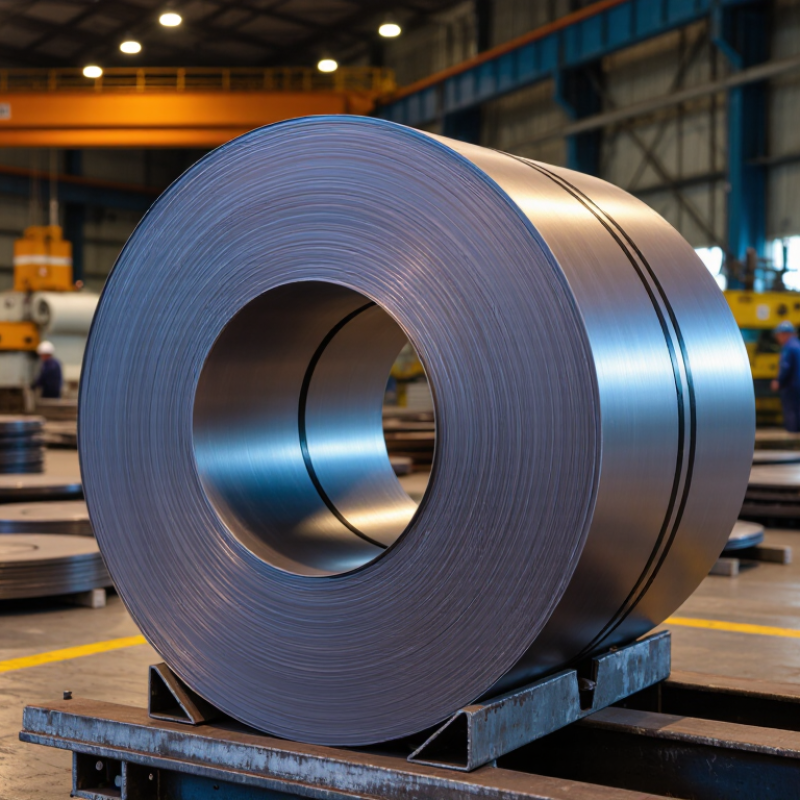
Hot rolled carbon steel coil is steel processed above its recrystallization temperature. Large slabs pass through heated rolling mills, where pressure reduces their thickness and forms a continuous coil. The result usually has a dark oxide layer called mill scale. Its surface is not mirror-smooth.

Carbon steel contains carbon and iron, with small amounts of other elements. Carbon content affects strength, hardness, weldability, and forming behavior. Hot rolling makes this material practical for structural frames, brackets, pipes, machinery parts, and storage equipment. In real fabrication work, coils are valued for consistent dimensions, broad availability, and efficient cutting. However, thickness tolerance and surface finish may vary more than cold rolled steel. That difference matters when appearance or precise forming is critical. I have seen purchasing teams overlook it, then pay more for extra grinding or coating.

Tips: Check the required thickness, width, grade, and mechanical properties before ordering. Ask for mill test certificates and confirm the coil’s weight limits. Inspect the edge condition and mill scale, especially for welding or painting. Store coils on stable supports, away from standing water. Small storage mistakes can create costly rust. A sample trial is wise, because one grade may behave differently on your equipment.

Why Choose Hot Rolled Carbon Steel Coil for Your Business? — What Is Hot Rolled Carbon Steel Coil?
Dimension Typical Data or Characteristic Business Relevance
Product definition Carbon steel rolled at elevated temperatures into a continuous coil. The rolling process generally takes place above the steel’s recrystallization temperature. Coil form supports continuous processing, storage, and feeding into fabrication equipment.
Typical thickness Commercial hot-rolled coil is commonly available in thicknesses of approximately 1.2–25.4 mm; actual ranges depend on the mill, grade, and product specification. Choose thickness according to the required strength, stiffness, forming operation, and finished-part design.
Typical width Widths commonly range from about 600 to 2,000 mm, subject to producer capabilities and availability. Matching coil width to the cutting or forming line can reduce edge trim and material waste.
Material density Approximately 7.85 g/cm³ for carbon steel. Useful for estimating coil weight, transport loads, and material requirements.
Grade and chemistry Composition and mechanical properties vary by grade and applicable specification. Low-carbon grades are generally selected for forming; higher-strength grades are used where greater strength is required. Confirm the specified grade, standard, and test requirements before comparing supplier quotations.
Surface condition The as-rolled surface commonly has mill scale and may show surface texture or color variation. Additional pickling, cleaning, or surface preparation may be needed for coating, painting, or appearance-critical applications.
Dimensional tolerance Thickness, width, flatness, and coil-weight tolerances depend on the product standard and purchase specification. Set tolerances to suit the production process and finished-part requirements to avoid fit-up or yield issues.
Common applications Structural components, welded pipe and tube, machinery parts, trailers, agricultural equipment, storage systems, and general fabrication. A versatile feedstock for manufacturers that need carbon steel in coil form for cutting, forming, or welding.
Processing options May be slit, cut to length, leveled, formed, or welded. Processing suitability depends on grade, thickness, and equipment. Coil supply can integrate with production lines and support efficient high-volume processing.
Key advantages Broad application range, efficient coil handling, and availability across multiple grades and dimensions. Can be a practical choice when the required surface finish and dimensional precision are compatible with hot-rolled products.
Points to evaluate Mill scale, surface finish, dimensional tolerances, grade certification, coil weight, and storage conditions. Compare total processing and handling costs—not just the quoted price per unit of weight.

How Hot Rolled Carbon Steel Coil Is Made

Hot rolled carbon steel coil begins with a carefully prepared slab. The slab enters a reheating furnace, often reaching about 1,100–1,250°C, depending on grade and mill practice. At this temperature, the steel becomes workable without melting. High-pressure water removes surface scale before rolling starts. This detail matters because leftover scale can affect surface quality.

The slab passes through roughing stands, which reduce its thickness and extend its length. Finishing stands then control the final gauge, shape, and surface condition. Sensors measure thickness continuously, but operators still inspect edges, temperature, and coil appearance. Perfect control is difficult. Small temperature changes can influence strength and dimensional consistency. After rolling, the strip moves across a controlled cooling table before winding into a coil. Cooling speed helps establish the required mechanical properties.

The World Steel Association’s World Steel in Figures 2024 reports approximately 1.89 billion tonnes of crude steel production in 2023. That scale reflects hot rolling’s importance in construction, machinery, transportation, and general fabrication. The International Energy Agency also identifies steelmaking as a major industrial emissions source, making furnace efficiency and process control increasingly important. Buyers should review mill test certificates, thickness tolerance, yield strength, tensile strength, and coil weight. A lower price may look attractive, yet inconsistent flatness can create extra leveling, cutting, and welding work. Scrap may quietly erase the saving.

Why Choose Hot Rolled Carbon Steel Coil for Your Business?

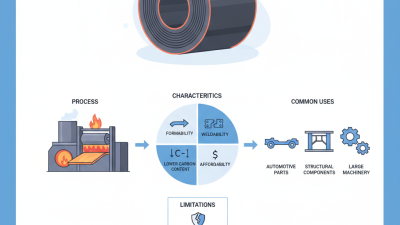
Hot rolled carbon steel coil is produced at high temperatures, making it suitable for efficient large-scale forming and applications where tight surface finish is not the primary requirement. The chart shows representative temperature ranges used during major stages of the hot rolling process. Actual values vary by carbon grade, slab thickness, mill design, and production speed.

Key Properties and Grades of Hot Rolled Carbon Steel

Hot rolled carbon steel coil is produced above its recrystallization temperature, making it practical for heavy sections and broad sheet applications. Its surface usually carries a dark mill scale and a slightly uneven texture. That appearance is normal, not necessarily a quality defect. The material offers useful ductility, moderate strength, and generally good weldability. It also tolerates demanding forming operations better than many high-strength grades.

Grade selection depends on the finished part, not only the purchase price. A36 is commonly chosen for structural frames, brackets, and base plates. S235JR provides a similar structural option under European specifications. SS400 suits many general fabrication uses, while SAE 1008 and SAE 1018 support applications requiring better forming or controlled carbon content.

Mechanical values can vary by standard, thickness, and production route. Check the mill test certificate.

Look closely at yield strength, tensile strength, elongation, carbon content, coil thickness, and dimensional tolerance. For outdoor storage, protect coils from standing water; trapped moisture can create rust stains beneath the scale. Cutting edges may need extra inspection because trimming can expose rough burrs. A common mistake is treating every grade as interchangeable. It is not. In practice, a cheaper coil can become expensive after excessive leveling, welding repairs, or surface preparation. Even experienced buyers occasionally focus too much on grade names and overlook thickness tolerance. Rechecking the drawing and service conditions is worthwhile.

Common Industrial Uses of Hot Rolled Carbon Steel Coil

Hot rolled carbon steel coil is used where strength, formability, and practical cost matter. In construction, fabricators cut it into plates, brackets, channels, and structural components. The coil’s broad availability helps shops produce parts in many sizes. Its surface may show mill scale and uneven coloring, so appearance can require extra work.

Manufacturers also use the material for truck frames, trailer parts, agricultural equipment, and machine bases. A coil can be slit into narrower strips for roll-formed sections or stamped components. In workshops, operators often value its predictable behavior during cutting and bending.

Still, thickness variation and surface condition deserve attention. Small differences can affect fit.

Pipes and storage tanks are other common applications, especially when the design prioritizes strength over a refined finish. Hot rolled steel is also found in rail-related components and heavy industrial supports. The right grade and thickness depend on load, forming needs, and the working environment. Corrosion protection may be necessary outdoors. That adds cost. Hot rolled coil is useful, but it is not automatically the best choice for every part; a sample run can reveal issues that a specification sheet misses.

How to Choose the Right Coil for Your Business

Choosing the right hot rolled carbon steel coil starts with the part you need to make. List its dimensions, forming method, service conditions, and required surface finish. A thick coil may suit structural brackets, while a thinner gauge can reduce weight in formed panels. Check the material grade and mechanical properties against your design, not just the quoted price. Ask the supplier for a mill test certificate and confirm coil width, thickness tolerance, edge condition, and packaging. Small mismatches can create scrap or slow a production line.

Supply scale matters, but it does not guarantee a suitable specification. World Steel Association’s World Steel in Figures 2024 reports global crude steel production of about 1.89 billion tonnes in 2023. That broad market figure gives context; it cannot predict a particular grade’s availability or lead time. Request current stock details and sample dimensions before committing. If the coil will be pickled, painted, welded, or bent tightly, discuss those operations with your processor. I would also verify handling and storage needs; moisture can leave marks, and this is easy to underestimate.

Tips: Compare quotes using the same grade, width, thickness, tolerance, and delivery terms. Test a small batch first. Keep the paperwork with the coil identification, so operators can trace material back to its certificate.