How to Choose the Best Carbon Steel Coil Roll for Your Needs?
Choosing the right Carbon Steel Coil Roll can significantly impact your project. According to industry expert John Smith, "Selecting the correct coil can enhance both efficiency and durability." With many options available, understanding your specific needs is essential.
Different grades and thicknesses suit various applications, from construction to manufacturing. For instance, a lighter gauge might work for automotive parts, while heavier coils are better for structural components. It's vital to consider your project's exact requirements before deciding.
However, challenges arise. Not all suppliers provide reliable information. Additionally, different standards exist globally, which can complicate comparisons. It’s crucial to research and consult professionals when uncertain. The right Carbon Steel Coil Roll can make a difference, so invest the time to choose wisely.
Factors to Consider When Selecting Carbon Steel Coil Rolls
When selecting carbon steel coil rolls, several factors should be evaluated. The thickness and width of the coils are crucial. These dimensions affect the application and structural integrity. Generally, thicker coils provide more strength but may limit flexibility. Wider coils can cover larger areas but could be heavier to handle.
Consider the grade of the carbon steel. Different grades indicate varying properties, such as tensile strength and corrosion resistance. A higher grade might be necessary for specific applications like automotive or aerospace. Evaluate your specific needs carefully. It often helps to consult with professionals about the right grade.
Tips: Verify the supplier's certification. Quality can differ significantly between providers. Look for reviews or testimonials. Also, think about the long-term storage and usage. Improper handling can lead to rust or deformation. Proper care for your coils can ensure their longevity and efficiency in achieving your goals.
How to Choose the Best Carbon Steel Coil Roll for Your Needs? - Factors to Consider When Selecting Carbon Steel Coil Rolls
| Factor |
Description |
Importance Level |
| Thickness |
The gauge or thickness of the steel coil impacts its strength and application. |
High |
| Coating |
Consider if the coil roll is galvanized or has a protective coating for corrosion resistance. |
Medium |
| Width |
Determine the width suitable for your project or machinery compatibility. |
High |
| Mechanical Properties |
Understand the tensile strength, yield strength, and ductility required for your application. |
High |
| Surface Finish |
Choose the desired surface condition, such as pickled or oiled, based on its end use. |
Medium |
| Price |
Evaluate your budget and compare prices from different suppliers. |
Medium |
| Availability |
Ensure the coil roll size and specifications are readily available for timely delivery. |
High |
Understanding Different Grades of Carbon Steel for Coil Applications
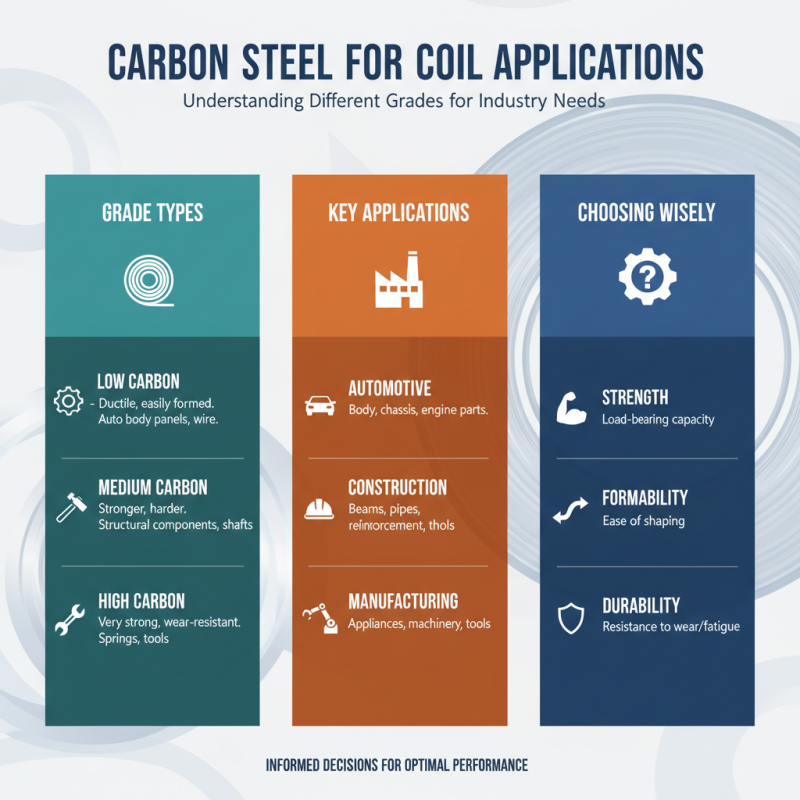
Choosing the right grade of carbon steel for coil applications is crucial. Various grades serve distinct purposes in industries like automotive, construction, and manufacturing. Understanding these grades helps in making an informed decision tailored to specific needs.
Carbon steel is categorized into several grades defined by their carbon content. Low-carbon steel, with less than 0.3% carbon, is quite malleable. It suits applications requiring extensive forming and welding. On the other hand, medium-carbon steel, ranging between 0.3% to 0.6% carbon, offers a balance of strength and ductility. It's commonly used in the production of structural components.
High-carbon steel, containing more than 0.6% carbon, is harder and stronger. However, it can be brittle and challenging to weld. This makes it suitable for applications like high-strength wires and springs. A thoughtful approach to selecting the right grade ensures optimal performance, yet it can often feel overwhelming. One might wonder if the choice reflects the best balance between strength and malleability. The decision is not always clear-cut, requiring reflection on specific application needs and challenges.
Evaluating the Thickness and Width of Carbon Steel Coils
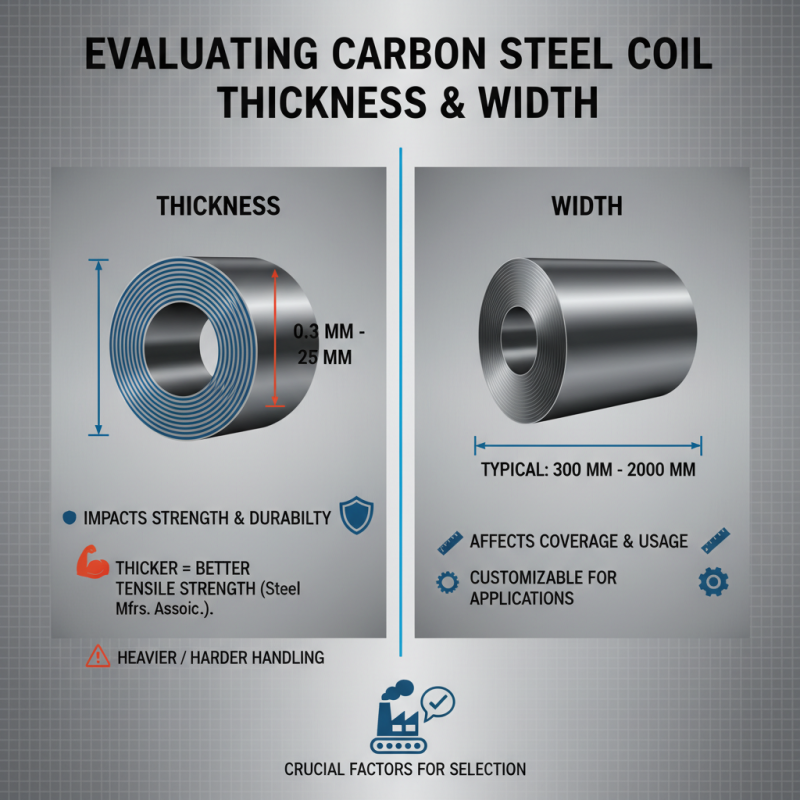
When evaluating carbon steel coils, thickness and width are crucial factors. The thickness of a coil can significantly impact its strength and durability. Standard thickness ranges from 0.3 mm to 25 mm. A report from the Steel Manufacturers Association highlights that thicker coils often exhibit better tensile strength. However, thicker coils can be heavier, making handling more challenging.
Width is equally important. Most carbon steel coils have widths between 1,000 mm and 2,000 mm. A narrower width is ideal for specific applications, such as automotive parts, where precision is key. Conversely, wider coils serve structural applications effectively. The choice depends on the end-use requirements and manufacturing processes.
Seek coils that balance these dimensions effectively. Overly thick coils might not fit into machinery designed for thinner materials. In contrast, excessively wide coils may waste material and elevate costs. Each project's demands vary, making it essential to assess both thickness and width carefully. Always consult technical specifications to ensure alignment with project goals.
The Importance of Coil Weight and Tolerance in Production Processes
When selecting carbon steel coil rolls, understanding coil weight and tolerance is crucial. Coil weight impacts handling and shipping costs. A heavier coil may lead to increased shipping fees, affecting your overall budget. Each project might require a specific coil weight for optimal performance, making this a key consideration during selection.
Tolerance levels also play a significant role in production processes. Precision in thickness and width is vital for achieving desired outcomes. Variations in tolerance can lead to defects in the final product. Industry standards often dictate tolerance levels, but not all suppliers meet these criteria consistently. It's essential to verify that the coil you choose adheres to the specifications you need.
Sometimes, manufacturers may overlook the importance of these factors, resulting in production delays. It's crucial to engage with suppliers who prioritize quality control. Regular audits and checks can help ensure compliance with weight and tolerance standards. Reflecting on these details can save time and resources in the long run.
Assessing Surface Finish and Coating Options for Carbon Steel Coils
When selecting carbon steel coils, surface finish and coating options play a crucial role in performance. Different finishes affect corrosion resistance, which is vital for longevity. A study by the American Iron and Steel Institute highlighted that properly coated carbon steel can reduce corrosion rates by over 75%. This significant impact emphasizes the need to understand finish options.
Surface finishes range from hot-rolled to cold-rolled. Hot-rolled steel typically has a rougher texture, while cold-rolled offers a smoother, more refined surface. Some applications may prefer one over the other. It’s essential to assess the operational environment. Will the product face moisture or chemicals? Coatings such as galvanization or powder coating can enhance protection against such elements, proving essential in various industries.
Tips: Always evaluate potential exposure conditions for the finished product. Consider a trial sample to assess performance in real scenarios. Understand that costs may rise with additional coatings, but the trade-off could lead to extended durability. Sometimes, spending more upfront can prevent larger future expenses due to product failure.
Comparison of Surface Finishes for Carbon Steel Coils