Top 5 Carbon Steel Pipe Trends at 2026 China Import Export Fair?
The 2026 China Import Export Fair promises to showcase various trends in the carbon steel pipe industry. As businesses gather, there's a buzz around advanced manufacturing and innovative solutions. Carbon steel pipes play a crucial role in diverse applications, from construction to oil and gas.
With the introduction of AI technologies, buyers can easily find suppliers with essential certifications like ISO and CE. This shift enhances the efficiency of exploring the massive exhibition area. Yet, questions linger about the sustainability of carbon steel production. Balancing growth and environmental impact remains a challenge that requires thoughtful discussions.
In this dynamic landscape, understanding the evolving trends is vital. The fair will highlight key players shaping the carbon steel pipe market. Attendees will reflect on how these innovations can meet future demands while addressing industry challenges. The fusion of technology and traditional materials like carbon steel could redefine standards in manufacturing and supply chains.

Emerging Applications of Carbon Steel Pipes in Various Industries
The demand for carbon steel pipes is on the rise in various industries. These pipes are known for their strength and durability. Construction is a major sector where carbon steel pipes find extensive use. They are ideal for structural applications due to their rigidity. However, sourcing high-quality materials can sometimes be a challenge.
In the oil and gas industry, carbon steel pipes are critical. They transport hydrocarbons efficiently over long distances. However, the risk of corrosion can be a concern. Innovations like corrosion-resistant coatings are emerging but need further enhancement.
The automotive sector is also adopting carbon steel pipes. Lightweight designs are becoming more important. Manufacturers are looking for materials that balance weight and strength. These pipes can help achieve better fuel efficiency. Nonetheless, the industry must focus on recycling. Finding sustainable solutions is essential for the future.
Technological Innovations Driving Carbon Steel Pipe Production Efficiency
The focus on technological innovations in carbon steel pipe production is shifting dramatically. As we approach the 2026 China Import Export Fair, these advancements will be pivotal. Modern methods, such as automated welding, have enhanced productivity significantly. Factories can now produce pipes at a faster rate, reducing labor costs and minimizing human error.
Moreover, the integration of AI in monitoring production processes is transforming efficiency standards. Real-time data analysis can pinpoint operation inefficiencies. However, while these technologies offer improvements, they also present challenges. Workers may face skill gaps as automation rises. Companies must invest in training programs to bridge this divide.
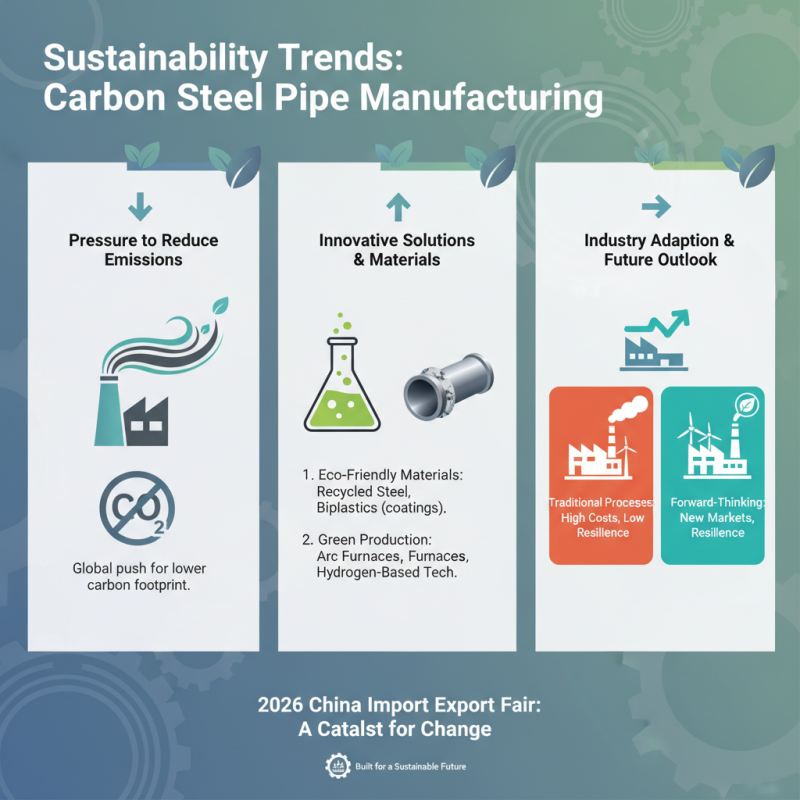
Sustainability is another crucial trend. Emerging technologies focus on eco-friendly production methods. Yet, the transition is not seamless. Many companies struggle with the implementation of these new systems. Balancing innovation with environmental responsibility remains a daunting task. The industry must navigate these complexities to thrive in a competitive landscape.
Top 5 Carbon Steel Pipe Trends at 2026 China Import Export Fair
Market Dynamics Influencing Demand for Carbon Steel Pipes in 2026
The demand for carbon steel pipes is changing significantly in 2026. According to recent industry reports, the global carbon steel pipe market is expected to reach USD 60 billion by the end of 2026. This growth is driven by various factors, including the rising infrastructure projects in emerging economies. Countries like India and Brazil are increasing spending on urban development, boosting pipe demand.
Another important aspect influencing this market is technology. Innovations in manufacturing techniques, like electric resistance welding, are making production more cost-effective. Companies are investing heavily in automated processes. However, adoption rates vary. Some manufacturers still rely on outdated practices, affecting overall efficiency. Studies suggest that companies embracing new technology could see a profit increase of up to 20%.
Environmental concerns cannot be overlooked. Carbon steel pipes are often favored for their durability. Yet, the push for sustainability raises questions about their environmental impact. Industry experts stress the need for greener alternatives. The challenge lies in balancing traditional steel production with eco-friendly practices. The data indicates that the shift toward more sustainable materials could reshape the market landscape by 2026.
Top 5 Carbon Steel Pipe Trends at 2026 China Import Export Fair
| Trend |
Description |
Impact on Demand |
Projected Growth (%) |
| Sustainability Initiatives |
Increased focus on environmentally friendly materials and practices |
Positive, due to regulatory changes and consumer preference |
15% |
| Technological Advancements |
Adoption of smart technology in manufacturing |
Moderate, enhancing efficiency and reducing costs |
12% |
| Global Trade Policies |
Changes in tariffs and trade agreements affecting exports |
Variable, subject to political climates |
8% |
| Market Diversification |
Expansion into emerging markets |
High, as demand rises globally |
20% |
| Customization Trends |
Increased demand for tailored solutions |
Positive, enhancing customer satisfaction |
10% |
Key Players and Competitive Strategies in the Carbon Steel Pipe Market
The carbon steel pipe market is evolving rapidly. Key players are adjusting their competitive strategies to capture greater market share. Many companies are focusing on innovation in manufacturing processes. This includes using advanced technologies to improve efficiency. The push for sustainability also plays a role. Companies are exploring eco-friendly materials and practices to meet market demands.
Supply chain optimization is a significant focus. Players are looking for reliable sources of raw materials. This ensures timely production and reduces costs. Collaborations between manufacturers and suppliers are becoming common. However, not all partnerships have been smooth. Some companies face challenges in aligning their goals and expectations. This friction highlights the need for better communication.
Additionally, market analysis shows a shift in consumer preferences. Clients are becoming more aware of quality and durability. They seek products that offer better value for money. As a result, businesses must adapt quickly. Staying ahead of trends is crucial. The pressure to innovate can sometimes lead to oversights. An unbalanced focus on speed can compromise quality. Reflecting on these aspects is essential for long-term success in the carbon steel pipe market.