What is Carbon Hot Rolled Steel Coil and Its Benefits for Buyers?
In the world of manufacturing, "Carbon Hot Rolled Steel Coil" stands as a critical material. This product is known for its strength and versatility in various applications. Experts like Dr. John Miller, a steel industry analyst, emphasize its importance by stating, "Carbon Hot Rolled Steel Coil forms the backbone of numerous structural applications." His insight highlights the material’s widespread acceptance.
Buyers often seek Carbon Hot Rolled Steel Coils due to their affordability and durability. The coils undergo a hot rolling process that enhances their mechanical properties. This process results in steel that can withstand significant stress, making it ideal for construction and manufacturing.
Despite its benefits, buyers should consider potential challenges. Variations in quality can occur among suppliers, and understanding specifications is crucial. Buyers should be aware of these factors to make informed decisions. Overall, Carbon Hot Rolled Steel Coil remains essential for industries focused on reliability and performance.
Definition of Carbon Hot Rolled Steel Coil
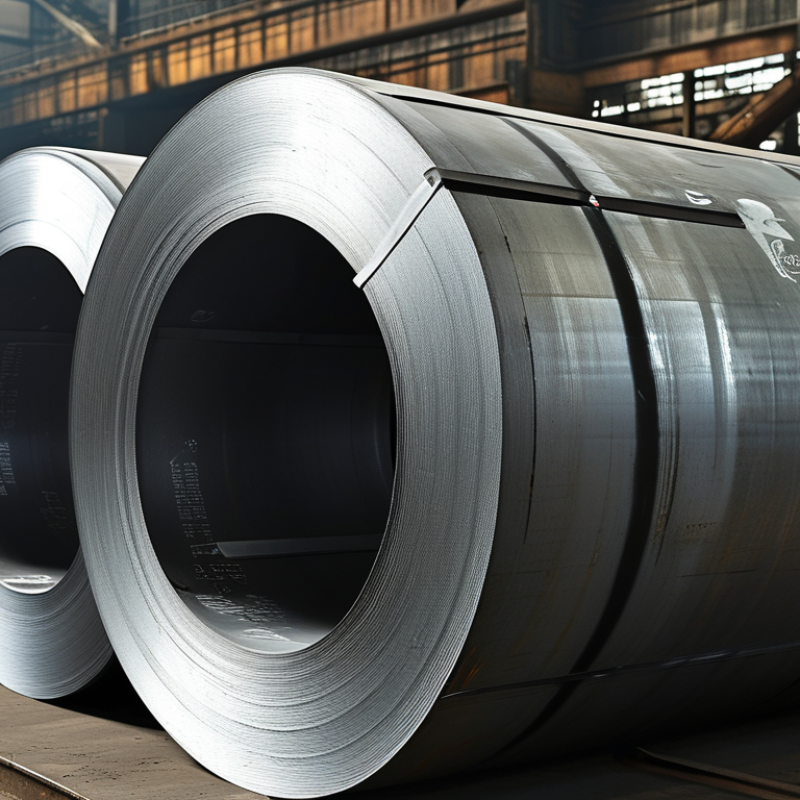
Carbon hot rolled steel coil is a vital material in various industries. This type of steel is produced by rolling steel at high temperatures, typically over 1,700°F. The process makes the steel easier to shape and form. As a result, it becomes highly versatile for numerous applications.
One key benefit of carbon hot rolled steel coil is its strength. It possesses excellent durability, which makes it ideal for construction projects, automotive components, and heavy machinery. The rolling process enhances its mechanical properties, giving it a fine balance of strength and flexibility. This steel can be welded easily, allowing for creative design possibilities.
Buyers should also consider the cost-effectiveness of carbon hot rolled steel coil. Generally, the production process is faster than that of cold rolled variants. This efficiency often translates to lower prices for customers. However, it is essential to assess specific needs before selecting this material, as it may not be suitable for all applications. Some users find themselves surprised by the surface finish or dimensional tolerances, necessitating careful consideration of end-use requirements.
Manufacturing Process of Carbon Hot Rolled Steel Coils
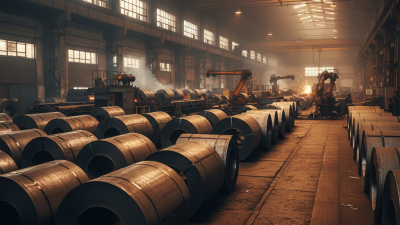
The manufacturing process of carbon hot rolled steel coils begins with heating steel billets to high temperatures. This process transforms solid steel into a malleable state. Once heated, the billets pass through a series of rollers. The rollers reduce thickness and shape the steel into coils. This method produces sheets that are generally more uniform in thickness.
Temperature control is crucial during this phase. Rolling at high temperatures allows for better shaping, but it can cause variations. These variations may lead to quality issues, which require careful monitoring. Hence, manufacturers must ensure precise control, balancing temperature and pressure.
After rolling, the coils undergo cooling. They can be cooled naturally or through a controlled process. Cooling affects the final properties of the steel. Some manufacturers might skip this step to expedite production. However, it’s a critical phase that impacts durability. Buyers should consider the manufacturing nuances when choosing suppliers. Quality can vary significantly between different producers.
What is Carbon Hot Rolled Steel Coil and Its Benefits for Buyers?
| Dimension |
Specification |
Benefits |
| Thickness |
1.5 mm - 25 mm |
Versatile for various applications |
| Width |
600 mm - 2000 mm |
Reduced material wastage |
| Length |
Up to 6000 mm |
Optimized for shipping and handling |
| Yield Strength |
230 MPa - 400 MPa |
Enhanced structural integrity |
| Applications |
Automotive, Construction, Manufacturing |
Wide range of industry applications |
Key Characteristics and Properties of Carbon Hot Rolled Steel
Carbon hot rolled steel coil is a popular choice in the manufacturing sector. Its key characteristics include strength, workability, and affordability. Hot rolling involves heating steel above its recrystallization temperature, making it easier to shape. According to the World Steel Association, the process can improve yield strength and ductility.
This type of steel has a high carbon content, which boosts its mechanical properties. It typically contains 0.05% to 0.25% carbon by weight. This composition enhances hardness but may also result in less malleability compared to low-carbon variants. In applications such as construction and automotive, where high strength is essential, these properties are highly valued. However, increased brittleness can be a concern, limiting its use in certain designs.
Moreover, hot rolled steel coils come with a scaled surface, which can be both a benefit and a drawback. The scale provides some corrosion resistance but may require further processing for aesthetics or additional coatings. Understanding these nuances is important for buyers to make well-informed decisions. Industry reports indicate that improper handling can lead to warping or dimensional inaccuracies, thus it's essential to source from reliable suppliers.
Benefits of Using Carbon Hot Rolled Steel Coils for Buyers
Carbon hot rolled steel coils are popular in various industries due to their versatile applications. These coils are produced by rolling steel at high temperatures, which enhances ductility and formability. Buyers appreciate their cost-effectiveness and availability in bulk. This makes them suitable for projects ranging from construction to manufacturing.
One of the main benefits of using carbon hot rolled steel coils is their structural integrity. They provide strength and durability, essential for building frameworks. The coils can be easily shaped into various forms, making them convenient for manufacturers. Additionally, they often require less processing, saving time and resources. However, the coils may have surface imperfections. This can affect aesthetics but often does not compromise performance.
Another advantage is the coil's ability to withstand harsh conditions. They perform well in environments exposed to high temperatures and pressures. These properties make them useful in automotive and heavy machinery applications. Buyers should consider their specific needs when selecting coils. Knowing the limitations and potential issues can lead to better decision-making for projects.
Applications of Carbon Hot Rolled Steel Coils in Various Industries
Carbon hot rolled steel coils are essential in various industries due to their versatility and strength. These coils are widely used in construction, automotive, and manufacturing sectors. In construction, they serve as fundamental components in beams, columns, and frames. The durability of these materials ensures stability in structures.
In the automotive industry, carbon hot rolled steel coils are integral for producing body panels and chassis. Their ability to withstand high stress while maintaining form is critical for vehicle safety. Manufacturing industries also rely on these coils for creating machinery parts and tools. This highlights their adaptability in meeting different specifications and performance criteria.
However, challenges exist in sourcing quality steel coils. Buyers must ensure they receive reliable products from reputable suppliers. Sometimes, the lack of quality control can lead to subpar materials, negatively impacting projects. Continuous evaluation of suppliers and feedback from users is crucial. It’s an ongoing process that warrants attention for successful application in any industry.
Carbon Hot Rolled Steel Coil Applications
The following bar chart illustrates the various applications of Carbon Hot Rolled Steel Coils across different industries, showcasing their significant utilization.