Inquiry
Form loading...

2026 Best Carbon Steel Strip Coil Types for Buyers?

Choosing the best Carbon Steel Strip Coil for 2026 requires more than comparing price per tonne. Buyers must examine grade, thickness, width, edge condition, surface quality, coil weight, and traceability. A bright, tightly wound coil may still fail if its yield strength varies across the strip. Small details matter.

The World Steel Association reported 1,882.6 million tonnes of global crude steel production in 2024, a 0.9% decline from 2023. Its World Steel in Figures 2025 also shows a market shaped by uneven regional demand and continuing manufacturing pressure. These figures suggest a practical lesson. Availability may change faster than specifications. Buyers should confirm mill capacity, lead times, minimum order quantities, and testing documents before issuing a purchase order.

Edwin Basson, Director General of the World Steel Association, has described steel as “essential to modern life.” That view applies directly to strip-coil purchasing. Carbon steel strip supports automotive parts, appliances, electrical components, construction hardware, and precision fabrication. The strongest choice is not always the hardest grade. It is the grade that fits forming requirements, corrosion exposure, welding needs, and production speed.

Some assumptions deserve reconsideration. Lower cost can create higher scrap. A wider coil can increase slitting waste. Imported material can appear attractive until freight, inspection, and delay risks are included. This 2026 guide compares the main Carbon Steel Strip Coil types through measurable specifications, supplier reliability, and real production use. Perfect selection is unlikely. Informed selection is achievable.
2026 Best Carbon Steel Strip Coil Types for Buyers?

Carbon Steel Strip Coil: Definition, Composition, and Core Properties

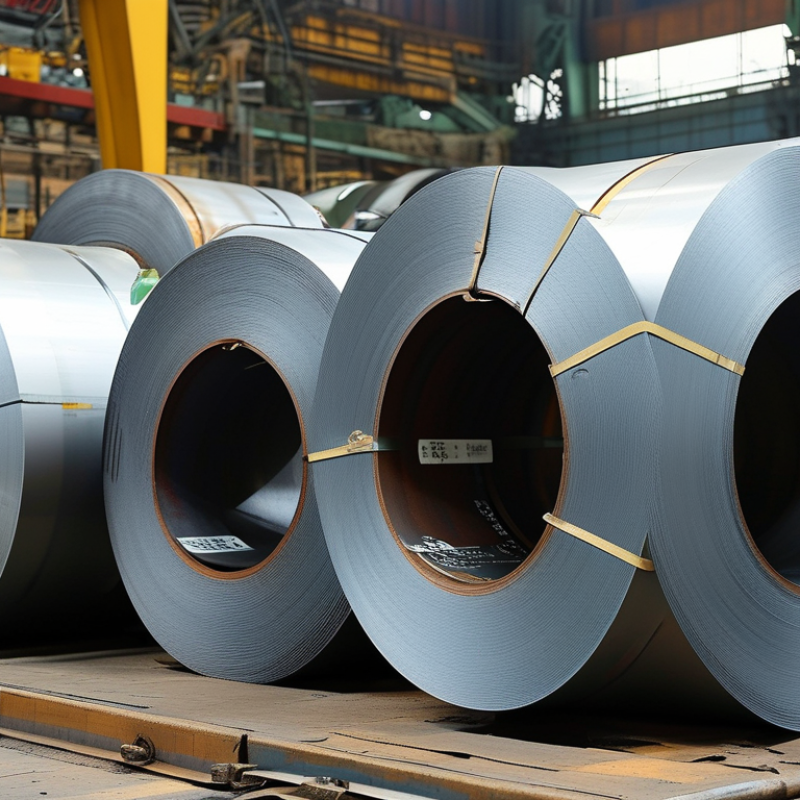
Carbon steel strip coil is flat-rolled steel wound into a continuous coil. Its width and thickness suit stamping, forming, slitting, and fabrication. Unlike stainless steel, it contains no deliberate high chromium level for passive corrosion protection. Buyers should check grade, temper, edge condition, surface finish, and dimensional tolerances before comparing prices.

Its base is iron, with carbon as the main strengthening element. Commercial low-carbon grades often contain about 0.05–0.25% carbon, while medium-carbon grades may approach 0.60%. Manganese, silicon, sulfur, and phosphorus also affect performance. The 2.11% carbon boundary is a useful classification guide, not a complete purchasing rule. A neat chemical range can still mislead.

Scale matters.

World Steel Association’s World Steel in Figures 2024 reported 1,892.4 million tonnes of crude steel production in 2023. The USGS Mineral Commodity Summaries 2024 also placed global crude steel output near 1.9 billion tonnes. These figures show the material’s industrial reach, but they do not guarantee coil consistency.

Higher carbon usually improves strength and hardness, yet reduces ductility and weldability. Low-carbon strip is easier to form and weld, but it may lack wear resistance. Carbon steel also rusts readily in humid service. Buyers sometimes overlook that weakness. Surface oil, storage humidity, and packaging can change the delivered condition.

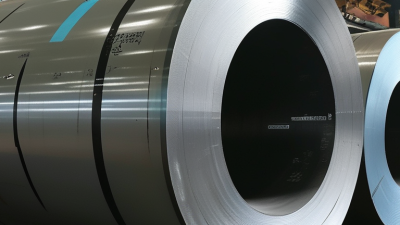
Main Types of Carbon Steel Strip Coil and Their Grade Differences

Carbon steel strip coil is commonly divided by rolling process and carbon content. Hot-rolled strip is produced at high temperatures, leaving a darker surface and wider thickness tolerance. It suits brackets, structural parts, and general fabrication.

Cold-rolled strip passes through additional rollers, creating a smoother surface and tighter dimensions. It is often selected for stamped panels, precision parts, and painted components.

Low-carbon grades, such as SAE 1008 or 1010, usually contain less carbon and offer good formability and weldability. They bend easily around a small radius. Medium-carbon grades, such as SAE 1045, provide greater strength and hardness but require more forming force.

High-carbon grades, including SAE 1075, can achieve high hardness after heat treatment. They are useful for springs, blades, and wear-resistant parts. Harder does not always mean better.

In practical purchasing, I check the mill certificate, thickness tolerance, coil width, surface condition, and mechanical test results. A grade number alone is not enough. The same nominal grade can behave differently after annealing, skin-pass rolling, or heat treatment.

I once underestimated the effect of edge quality on a narrow stamping job; small burrs caused repeated feeding problems. That mistake still influences my inspection checklist.

Buyers should confirm the required standard, carbon range, yield strength, tensile strength, elongation, and intended forming method before ordering. Cost comparisons become unreliable when these details remain unclear.

Key Manufacturing Processes and Available Coil Specifications

Carbon steel strip coil selection starts with the manufacturing route. Hot-rolled strip is produced above the steel’s recrystallization temperature, creating a rougher surface and wider thickness variation. It suits structural parts, brackets, and applications where appearance is secondary. Pickling removes mill scale, while oiling helps reduce corrosion during storage.

Cold-rolled strip passes through additional reduction stands at room temperature. This process improves surface smoothness, dimensional control, and strength consistency. Buyers can specify annealed, full-hard, or tempered material, depending on forming requirements.

Low-carbon grades are easier to bend, while higher-carbon grades provide greater hardness and wear resistance. They may crack during tight forming, however.

Available coil specifications usually include thickness, width, inner diameter, outer diameter, coil weight, steel grade, and edge condition. Common edge choices include slit, mill, and rounded edges. Buyers should also define thickness tolerance, width tolerance, surface finish, flatness, and oiling requirements. A practical inspection checks the coil tag, caliper readings, edge quality, and visible rust before production. Small details matter. A specification can still be incomplete. For example, stating “cold-rolled strip” without temper, tolerance, or surface requirements may create costly misunderstandings. Sampling several points across the coil is wiser than checking only the outer wraps.

How to Select Carbon Steel Strip Coil for Different Applications

2026 Best Carbon Steel Strip Coil Types for Buyers?
How to Select Carbon Steel Strip Coil for Different Applications

Choosing carbon steel strip coil starts with the finished part, not the lowest quoted price. For stamping, low-carbon, annealed strip usually forms more easily and reduces edge cracking. For springs or wear components, higher carbon grades offer greater hardness after heat treatment. They also demand tighter forming control. Check thickness, width, yield strength, tensile strength, and elongation together. One value cannot describe performance.

Slit edge quality matters when strip enters a high-speed line. Burrs can damage dies, distort narrow parts, or create handling risks. Specify deburred, rounded, or standard slit edges according to the process. For welded tube, consistent width and flatness support stable joining. For shims, gauges, and precision parts, thickness tolerance may matter more than nominal strength. Measure samples across the coil, not only near the outside wraps. Small variations become expensive later.

Before approval, review the mill test certificate, heat number, surface condition, coil weight, and inner diameter. Confirm whether the surface is oiled, pickled, or coated. Storage conditions also affect rust, especially in humid workshops. I have seen buyers choose a suitable grade but overlook handling limits and packaging damage. That mistake is easy to repeat. Ask for sample material and run a forming or hardness trial when the application is critical. Keep acceptance criteria written and measurable. A supplier’s technical response should match the production route, not just a catalog description.

2026 Best Carbon Steel Strip Coil Types for Buyers? - How to Select Carbon Steel Strip Coil for Different Applications

The following comparison uses typical industry ranges for carbon steel strip coil. Final values depend on the applicable standard, product thickness, heat treatment, rolling reduction, temper, coating, and supplier certificate.

Strip Coil Type Typical Grades Approx. Carbon Content Typical Thickness Typical Mechanical Range Surface and Delivery Condition Suitable Applications Main Advantages Buyer Selection Priorities
Low-Carbon Annealed Cold-Rolled Strip SAE 1006, SAE 1008, SAE 1010 Approximately 0.04–0.10% C Approximately 0.15–3.00 mm Typical tensile strength: 270–370 MPa
Typical yield strength: 140–280 MPa
Bright or matte cold-rolled surface; annealed and skin-passed; slit-edge or mill-edge options Deep-drawn components, brackets, covers, stamped parts, electrical enclosures, general fabrication Excellent formability, welding performance, and dimensional consistency Confirm drawability grade, elongation, r-value, surface class, flatness, and edge condition
Low-Carbon Full-Hard Cold-Rolled Strip SAE 1008, SAE 1010, equivalent low-carbon grades Approximately 0.04–0.10% C Approximately 0.20–2.00 mm Typical tensile strength: 350–550 MPa
Hardness commonly higher than annealed material
Cold-rolled, full-hard, usually supplied without final annealing Simple bends, clips, washers, spacers, light-duty formed parts, reinforcement pieces Higher strength and improved resistance to deformation than annealed strip Check minimum bend radius, forming direction, hardness, residual stress, and flatness
Medium-Carbon Cold-Rolled or Annealed Strip SAE 1020, SAE 1030, SAE 1045 Approximately 0.18–0.50% C Approximately 0.30–3.00 mm Typical tensile strength: 450–750 MPa in annealed or normalized conditions Cold-rolled, annealed, or normalized; may be supplied with a lightly oiled surface Machined parts, shafts, pins, brackets, tooling components, moderate-strength stampings Higher strength and wear resistance than low-carbon strip; suitable for heat treatment Balance strength against formability; specify heat-treatment condition and weldability needs
High-Carbon Annealed Strip SAE 1050, SAE 1060, SAE 1070, SAE 1075 Approximately 0.48–0.80% C Approximately 0.10–2.00 mm Typical annealed tensile strength: 550–850 MPa Annealed for improved processing; bright, matte, or lightly oiled surface Knives, scrapers, saw components, wear strips, blades, heat-treated industrial parts Good hardenability, wear resistance, and potential for high final hardness Specify spheroidized annealing when machining or forming is required; verify decarburization limits
High-Carbon Spring-Temper Strip SAE 1070, SAE 1075, SAE 1090, SAE 1095 Approximately 0.65–1.05% C Approximately 0.05–1.50 mm Typical tensile strength: 1,200–2,000 MPa
Temper-dependent hardness and elastic performance
Cold-rolled and hardened/tempered; bright, blue, or lightly oiled finish may be specified Springs, clips, retaining rings, measuring tapes, saw blades, tension components High elastic limit, fatigue resistance, and wear resistance when correctly processed Define temper range, hardness, flatness, camber, fatigue requirement, burr height, and coiling direction
Galvanized Low-Carbon Strip Coil Low-carbon drawing or structural grades Usually approximately 0.04–0.20% C Approximately 0.25–3.00 mm Typical tensile strength: 270–550 MPa, depending on substrate and temper Zinc-coated by hot-dip or electro-galvanizing; coating mass and surface finish must be specified Roofing and building components, ducts, brackets, cable trays, appliance parts, corrosion-protected stampings Improved atmospheric corrosion resistance and reduced need for post-fabrication coating Specify coating type, coating mass, surface quality, bend radius, weldability, and exposed-service environment
Pickled and Oiled Hot-Rolled Strip Low- and medium-carbon structural grades Approximately 0.05–0.45% C Approximately 1.50–6.00 mm Typical tensile strength: 350–700 MPa
Grade- and condition-dependent
Hot-rolled, descaled by pickling, and coated with a temporary protective oil Automotive reinforcements, frames, brackets, welded structures, heavy-duty fabricated components Lower cost for thicker strip, good welding performance, and improved surface cleanliness over standard hot-rolled scale Check dimensional tolerance, edge condition, oil compatibility, forming severity, and rust-prevention period
Precision Slit Carbon Steel Strip Low-, medium-, or high-carbon grades according to end use Grade-dependent, commonly 0.04–1.05% C Approximately 0.05–3.00 mm Mechanical properties follow the selected grade and temper Precision-slit coil with controlled width, burr, camber, and edge profile Fine blanking, electronic components, small springs, stamped terminals, precision assemblies Reduced setup waste, consistent feeding, and improved dimensional repeatability Set width tolerance, burr height, camber, coil inside diameter, outside diameter, and weld-free length
Decarburization-Controlled High-Carbon Strip SAE 1075, SAE 1090, SAE 1095 and equivalent spring grades Approximately 0.70–1.05% C Approximately 0.10–1.50 mm Typically selected by hardness and tensile strength after heat treatment Controlled-atmosphere annealed or hardened/tempered; surface decarburization limits are specified Precision springs, cutting edges, wear-resistant parts, high-cycle flexible components More predictable hardening response and improved surface fatigue performance Require decarburization depth, hardness profile, microstructure, inclusion level, and fatigue testing requirements

Selection rule: choose the grade and condition first by forming or spring requirements, then confirm thickness and width tolerances, edge quality, surface condition, corrosion protection, coil dimensions, applicable standard, inspection documents, and required testing.

Buyer Checklist: Quality Standards, Pricing, and Supplier Evaluation

2026 buyers should judge carbon steel strip coil by end use, not appearance alone. For stamping, check yield strength, tensile strength, elongation, thickness tolerance, and edge condition. ASTM A1008/A1011 and EN 10139 offer useful reference points, but the purchase specification must match the forming process. The World Steel Association reported global crude steel production near 1.9 billion tonnes in 2024. That scale does not guarantee consistent coil quality. Ask for heat numbers, mill test certificates, coating details, and traceability records. Inspect the coil ID, surface scratches, telescoping, and burrs before shipment.

Price needs context. The World Bank’s Commodity Markets Outlook shows steel prices remain sensitive to construction demand, energy costs, and regional supply changes. A low quotation may hide higher slitting losses, packaging charges, freight, or rejected material. Request a price formula, validity period, minimum order quantity, and currency terms. Compare delivered cost per usable tonne, not only the invoice price. One mistake I have seen is accepting a narrow tolerance without checking the buyer’s press capability. It creates expensive scrap later.

Tips: Request three recent inspection reports, not one sample. Verify laboratory accreditation and calibration dates. Test a retained sample when the order is important. Ask suppliers how they handle nonconforming coils, delays, and claims. ISO 9001 certification supports process control, but it is not proof of perfect steel. Review actual records. Supplier evaluation should include capacity, response time, packing photos, and references from similar applications. The checklist may feel excessive. It is cheaper than discovering defects after production.

2026 Best Carbon Steel Strip Coil Types for Buyers

Buyer checklist covering chemistry, quality standards, pricing comparability, and supplier evaluation.

Quality standards Confirm the applicable specification, such as ASTM A1008 for cold-rolled sheet and strip or ASTM A1011 for hot-rolled products. Request chemical and mechanical test certificates.
Pricing checklist Compare quotations using the same grade, thickness, width, coil weight, surface finish, tolerance, quantity, delivery term, freight, and applicable taxes.
Supplier evaluation Check production capacity, dimensional-control records, traceability, packaging, sample approval, lead time, export documentation, and nonconformance handling.

Chart data shows commonly specified SAE/AISI carbon ranges by grade. Actual limits should always be verified against the purchase standard and mill test certificate.